 |
| Thomas' Legion |
| American Civil War HOMEPAGE |
| American Civil War |
| Causes of the Civil War : What Caused the Civil War |
| Organization of Union and Confederate Armies: Infantry, Cavalry, Artillery |
| Civil War Navy: Union Navy and Confederate Navy |
| American Civil War: The Soldier's Life |
| Civil War Turning Points |
| American Civil War: Casualties, Battles and Battlefields |
| Civil War Casualties, Fatalities & Statistics |
| Civil War Generals |
| American Civil War Desertion and Deserters: Union and Confederate |
| Civil War Prisoner of War: Union and Confederate Prison History |
| Civil War Reconstruction Era and Aftermath |
| American Civil War Genealogy and Research |
| Civil War |
| American Civil War Pictures - Photographs |
| African Americans and American Civil War History |
| American Civil War Store |
| American Civil War Polls |
| NORTH CAROLINA HISTORY |
| North Carolina Civil War History |
| North Carolina American Civil War Statistics, Battles, History |
| North Carolina Civil War History and Battles |
| North Carolina Civil War Regiments and Battles |
| North Carolina Coast: American Civil War |
| HISTORY OF WESTERN NORTH CAROLINA |
| Western North Carolina and the American Civil War |
| Western North Carolina: Civil War Troops, Regiments, Units |
| North Carolina: American Civil War Photos |
| Cherokee Chief William Holland Thomas |
| HISTORY OF THE CHEROKEE INDIANS |
| Cherokee Indian Heritage, History, Culture, Customs, Ceremonies, and Religion |
| Cherokee Indians: American Civil War |
| History of the Eastern Band of Cherokee Indian Nation |
| Cherokee War Rituals, Culture, Festivals, Government, and Beliefs |
| Researching your Cherokee Heritage |
| Civil War Diary, Memoirs, Letters, and Newspapers |
|
|
|
|
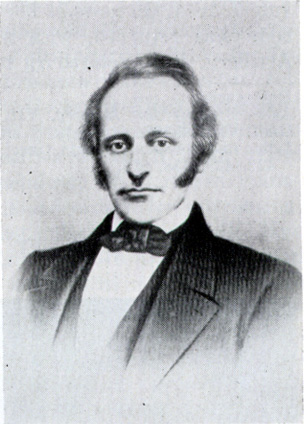
Governor John Willis Ellis
(November 23, 1820 – July 7, 1861)
| North Carolina Governor John Willis Ellis |
|
| Courtesy state.nc.us |
John Willis
Ellis, a native of Rowan County, attended school at Randolph Macon and graduated from the University of North Carolina at
Chapel Hill. He would enter politics, serve three sessions in the House of Commons, and as a Democrat and supporter of internal improvements, be elected the 35th Governor of North Carolina
in 1859.
Whereas Governor Ellis would refuse Lincoln's demands in 1861, he would prepare North Carolina for what he believed
to be the Federal invasion of a sovereign State.
When
Fort Sumter fell to South Carolina troops on April 13, 1861, President Lincoln would immediately call
for 75,000 troops to coerce and subdue the rebellion. On April 15, known as Lincoln's Call For Troops, the president would demand that North Carolina
furnish two regiments for this undertaking.
On
April 15, North Carolina Governor John Ellis promptly replied to President Abraham Lincoln by stating, "Your dispatch is received, and if genuine, which its
extraordinary character leads me to doubt, I have to say in reply, that I regard the levy of troops made by the administration
for the purpose of subjugating the states of the South, as a violation of the Constitution, and as a gross usurption of power. I can be no party to this wicked violation of the laws of the country and
to this war upon the liberties of a free people. You can get no troops from North Carolina."
Prior to Civil War, the governor proposed a conference of Southern states with the objective of
preparing for the conflict. When President Lincoln demanded troops for the Union, Governor Ellis reacted by calling a special
session of the legislature, which would back Ellis and the idea for a convention to declare secession. On May 20, 1861, an ordinance for secession was passed for North Carolina to leave the
Union. But due to poor health, Governor Ellis, aged 40, died less than two months later on July 7, 1861, and was
buried at the Old English Cemetery in Salisbury. The Speaker of the North Carolina Senate, Henry T. Clark, completed his term.
Related Reading: The Civil War in North Carolina.
Description: Numerous battles and skirmishes were fought in North Carolina during the Civil War, and the campaigns
and battles themselves were crucial in the grand strategy of the conflict and involved some of the most famous generals of
the war. John Barrett presents the complete story of military engagements across the state, including the classical pitched
battle of Bentonville, the siege of Fort Fisher,
the amphibious campaigns on the coast, and cavalry sweeps such as Stoneman's raid. Also available in hardcover: The Civil War in North Carolina . .
Advance to:
Recommended Reading: The Tar Heel
State: A History of North Carolina
(Hardcover). Description: The Tar Heel State: A History of North Carolina constitutes the most comprehensive
and inclusive single-volume chronicle of the state’s storied past to date, culminating with an attentive look at recent
events that have transformed North Carolina into a southern
megastate. Integrating tales of famous pioneers, statesmen, soldiers, farmers, captains of industry, activists, and community
leaders with more marginalized voices, including those of Native Americans, African Americans, and women, Milton Ready gives
readers a view of North Carolina that encompasses perspectives and personalities from the coast, "tobacco road," the Piedmont,
and the mountains in this sweeping history of the Tar Heel State. The first such volume in more than two decades, Ready’s
work offers a distinctive view of the state’s history built from myriad stories and episodes. The Tar Heel State is
enhanced by one hundred and ninety illustrations and five maps. Continued below.
Ready begins
with a study of the state’s geography and then invites readers to revisit dramatic struggles of the American Revolution
and Civil War, the early history of Cherokees, the impact of slavery as an institution, the rise of industrial mills, and
the changes wrought by modern information-based technologies since 1970. Mixing spirited anecdotes and illustrative statistics,
Ready describes the rich Native American culture found by John White in 1585, the chartered chaos of North Carolina’s
proprietary settlement, and the chronic distrust of government that grew out of settlement patterns and the colony’s
early political economy. He challenges the perception of relaxed intellectualism attributed to the "Rip van Winkle" state,
the notion that slavery was a relatively benign institution in North Carolina,
and the commonly accepted interpretation of Reconstruction in the state. Ready also discusses how the woman suffrage movement
pushed North Carolina into a hesitant twentieth-century
progressivism. In perhaps his most significant contribution to North Carolina’s
historical record, Ready continues his narrative past the benchmark of World War II and into the twenty-first century. From
the civil rights struggle to the building of research triangles, triads, and parks, Ready recounts the events that have fueled
North Carolina’s accelerated development in recent years and the many challenges that have accompanied such rapid growth,
especially those of population change and environmental degradation.
Recommended
Reading: Encyclopedia of North Carolina
(Hardcover: 1328 pages) (The University of North Carolina Press), Description: The first single-volume reference to the events, institutions, and cultural forces that have defined
the state, the Encyclopedia of North Carolina is a landmark publication that will serve those who love and live in North Carolina for generations to come. Editor William S. Powell, whom
the Raleigh News & Observer described as a "living repository of information on all things North Carolinian," spent fifteen
years developing this volume. With contributions by more than 550 volunteer writers—including scholars, librarians,
journalists, and many others—it is a true "people's encyclopedia" of North
Carolina. Continued below...
The volume
includes more than 2,000 entries, presented alphabetically, consisting of longer essays on major subjects, briefer entries,
and short summaries and definitions. Most entries include suggestions for further reading. Centered on history and the humanities,
topics covered include agriculture; arts and architecture; business and industry; the Civil War; culture and customs; education;
geography; geology, mining, and archaeology; government, politics, and law; media; medicine, science, and technology; military
history; natural environment; organizations, clubs, and foundations; people, languages, and immigration; places and historic
preservation; precolonial and colonial history; recreation and tourism; religion; and transportation. An informative and engaging
compendium, the Encyclopedia of North Carolina is abundantly illustrated with 400 photographs and maps. It is both a celebration
and a gift—from the citizens of North Carolina, to the citizens of North Carolina.
"Truly an exhaustive and exciting view of every aspect of the Old
North State!”
Recommended Viewing: The Civil War - A Film by Ken Burns. Review: The
Civil War - A Film by Ken Burns is the most successful public-television miniseries in American history. The 11-hour Civil War didn't just captivate a nation,
reteaching to us our history in narrative terms; it actually also invented a new film language taken from its creator. When
people describe documentaries using the "Ken Burns approach," its style is understood: voice-over narrators reading letters
and documents dramatically and stating the writer's name at their conclusion, fresh live footage of places juxtaposed with
still images (photographs, paintings, maps, prints), anecdotal interviews, and romantic musical scores taken from the era
he depicts. Continued below...
The Civil War uses all of these devices to evoke atmosphere and resurrect an event that many knew
only from stale history books. While Burns is a historian, a researcher, and a documentarian, he's above all a gifted storyteller,
and it's his narrative powers that give this chronicle its beauty, overwhelming emotion, and devastating horror. Using the
words of old letters, eloquently read by a variety of celebrities, the stories of historians like Shelby Foote and rare, stained
photos, Burns allows us not only to relearn and finally understand our history, but also to feel and experience it. "Hailed
as a film masterpiece and landmark in historical storytelling." "[S]hould be a requirement for every
student."
Recommended
Reading: Touring the Carolina's Civil War Sites (Touring the Backroads Series). Description: Touring the Carolina's Civil War Sites helps travelers find the
Carolinas' famous Civil War battlefields, forts, and memorials, as well as the lesser skirmish
sites, homes, and towns that also played a significant role in the war. The book's 19 tours, which cover the 'entire Carolinas,'
combine riveting history with clear, concise directions and maps, creating a book that is as fascinating to the armchair reader
as it is to the person interested in heritage travel. Below are some examples from this outstanding book:
1. Fort Fisher - the largest sea fort in the war that protected the
vital town of Wilmington N.C., and the blockade runners so important for supplying Lee's Army of Northern Virginia.
2. Charleston
- where the whole shootin' match started.
3. Bentonville - the last large scale battle of the war.
4. Outer Banks - early Union victories here were vital to capturing many parts of Eastern North Carolina from which the
Union could launch several offensives.
5. Sherman's
March - the destruction of certain towns in both Carolinas (particularly South Carolina)
further weakened the South's will to continue the struggle.
I also enjoyed reading about the locations of various gravesites
of Confederate generals and their Civil War service. Indeed, if not for this book, this native North Carolinian and long-time
Civil War buff may never have learned of, and visited, the locations of some of the lesser-known sites other than those mentioned
above.
Johnson's writing style is smooth--without being overly simplistic--and contains several anecdotes (some humorous
ones too) of the interesting events which took place during the Civil War years. Highly recommended!
|
|
|
|
|
|
|
|